
Izumo region is rich in nature with mountains, rivers, lakes, plain, and sea. Northern side of the Izumo region faces the Sea of Japan, while the southern mountain range is called Chugoku Mountains. A rich and beautiful natural environment is preserved in Izumo, Shimane prefecture.
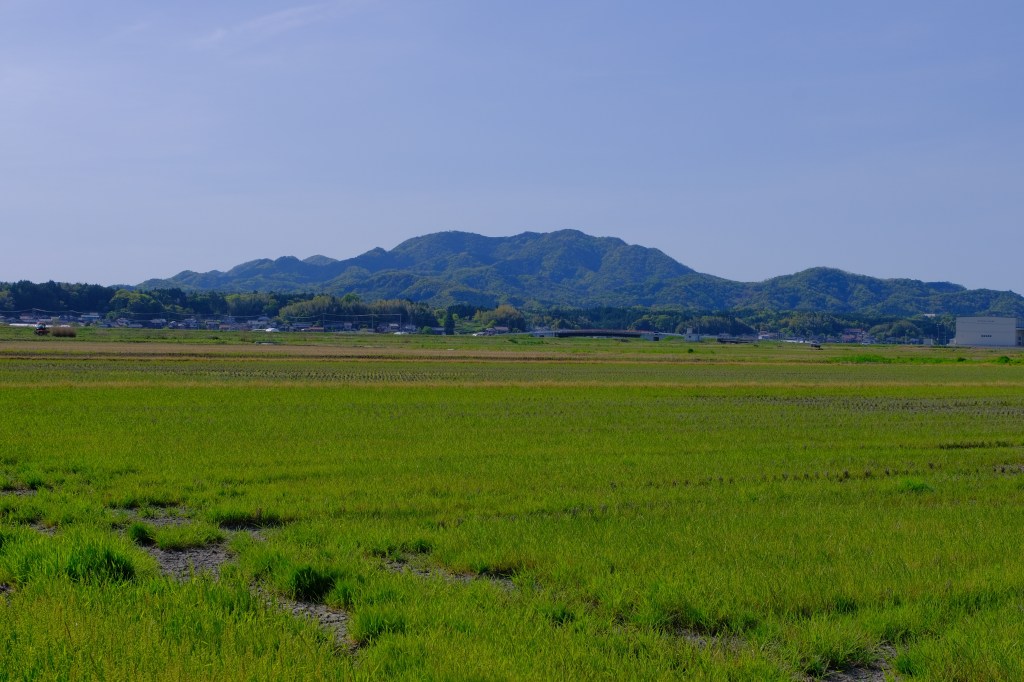
As we mentioned mountain and river in the previous article, I would like to introduce mountains and rivers in Izumo this time. If you have any chance to visit Izumo, a little knowledge about following locations may help you to enjoy Izumo region more.
Mount Sanbe – outdoor activities for all season
One of the popular mountain in this area is Mount Sanbe, with an elevation of 1,142m, located in between Izumo and Iwami region, almost center of Shimane prefecture. Mount Sanbe is an active volcano and designated as a part of the Daisen-Oki National Park.
At the foot of the mountain, there are grassy plains spreading out all the directions. On its broad grassy slopes you can enjoy outdoor activities in every season such as hiking, camping, skiing and onsen (hot spring). If you would like to enjoy hiking or trekking, there are variety routes approaching to the summit, and sightseeing chair lift also takes you up to the observatory. From the top of the mountain, you will be choked up with the panoramic view.
Mount Sentsu – historical mountain
One of the highest peak in the Chugoku Mountain range is Mount Sentsu, with an elevation of 1,142 m, located on the border of ancient Izumo province (Shimane prefecture) and Hoki province(Tottori prefecture). Mount Sentsu is a part of the Hiba-Dogo-Taishaku Quasi-National Park.
The base of Mount Sentsu is a rich source of iron sand. The mountain was historically known as a source of iron sand and this region became a renowned traditional iron producing area. Steel and Japanese swords were manufactured here in a traditional iron making method for more than thousands of years.
According to the Kojiki, “Records of Ancient Matters”, the oldest extant literary work in Japan written in the early 8th century, Mount Sentsu is the scene of the legendary battle between the god of sea and storm named Susanoo and 8-headed and 8-tailed dragon, Yamata-no-Orochi. In the story, the god Susanoo slew the evil dragon Yamata-no-Orochi at the foot of Mount Sentsu and the blood flowed into the Hii river.
Hii river – historically and georogically unique river
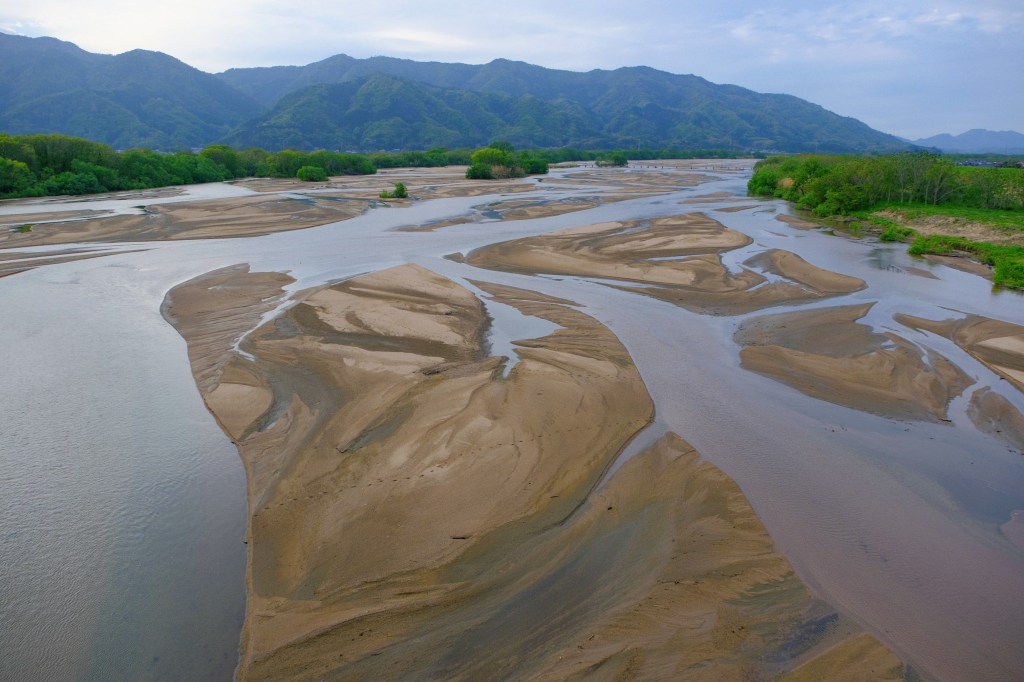
Hii river is a first-class river with a basin area of about 2,550 sq km and a length of 153 km originates from Mount Sentsu, flows from the Izumo Plain, currentry to Lake Shinji, and from Lake Shinji via the Ohashi River, Lake Nakaumi, and flows into the Sea of Japan.
Along with Mount Sentsu, Hii river is also depicted as a mythical setting in Kojiki. Hii river has been flooded frequently since ancient times, which is said to be the origin of the legend myths.
Hii river has two historical and geological features.
One is ceiling river, it means that bottom of the river is higher than the neighboring land. It is because of the new method of collecting iron sand at the upper reaches of Hii river, developed in the middle of Edo period(17-18c). Since then, the inflow of artificial sediment increased explosively.
Second, the flow of the river was artificially altered in the early modern period. The largest change was carried out during the flood of 1635. Hii river had previously flowed into the Sea of Japan directly from Izumo Plain, was turned completely eastward to flow into Lake Shinji.
Middle reaches of Hii river is a relaxing area if the weather is fine. Now, bank of Hii river is chosen as Japan’s Top 100 Blossoms. 800 Sakura trees over 2km stretch of the river make a sakura tunnel when they bloom at the end of March to beginning of April.
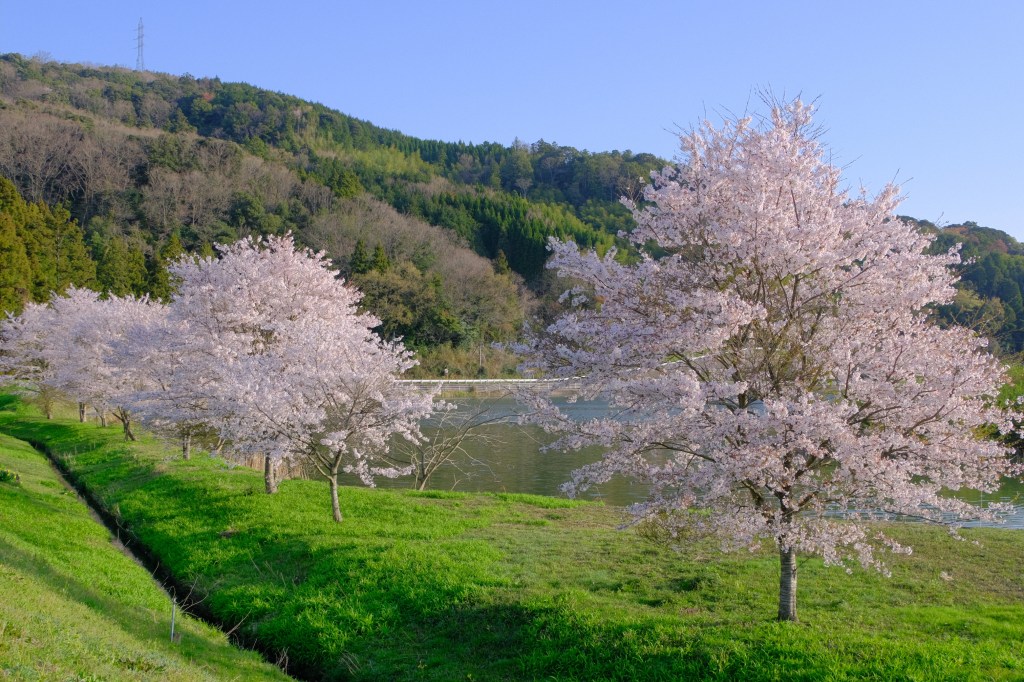
Izumo region is srrounded by beautiful nature with several National Parks, and it is historically and geographically unique area.
 Izumo Calligraphy Art | 出雲書アート